
Title of Project: No.1 House
Location: Haining, Zhejiang, China
Time of Design: Jan.2021
Typology:Residential Renovation/ Adaptive Reuse
Site Area (m2):570 m2
Floor Area (m2):675m2
Photography: AOGVISION
项目名称: 1号住宅
项目地点: 浙江省海宁市
设计时间:2021 年1月
项目类型:私人住宅改造、既有建筑更新、独栋住宅设计
用地面积:570 m2
建筑面积:675 m2
01 项目概览 | Project Overview
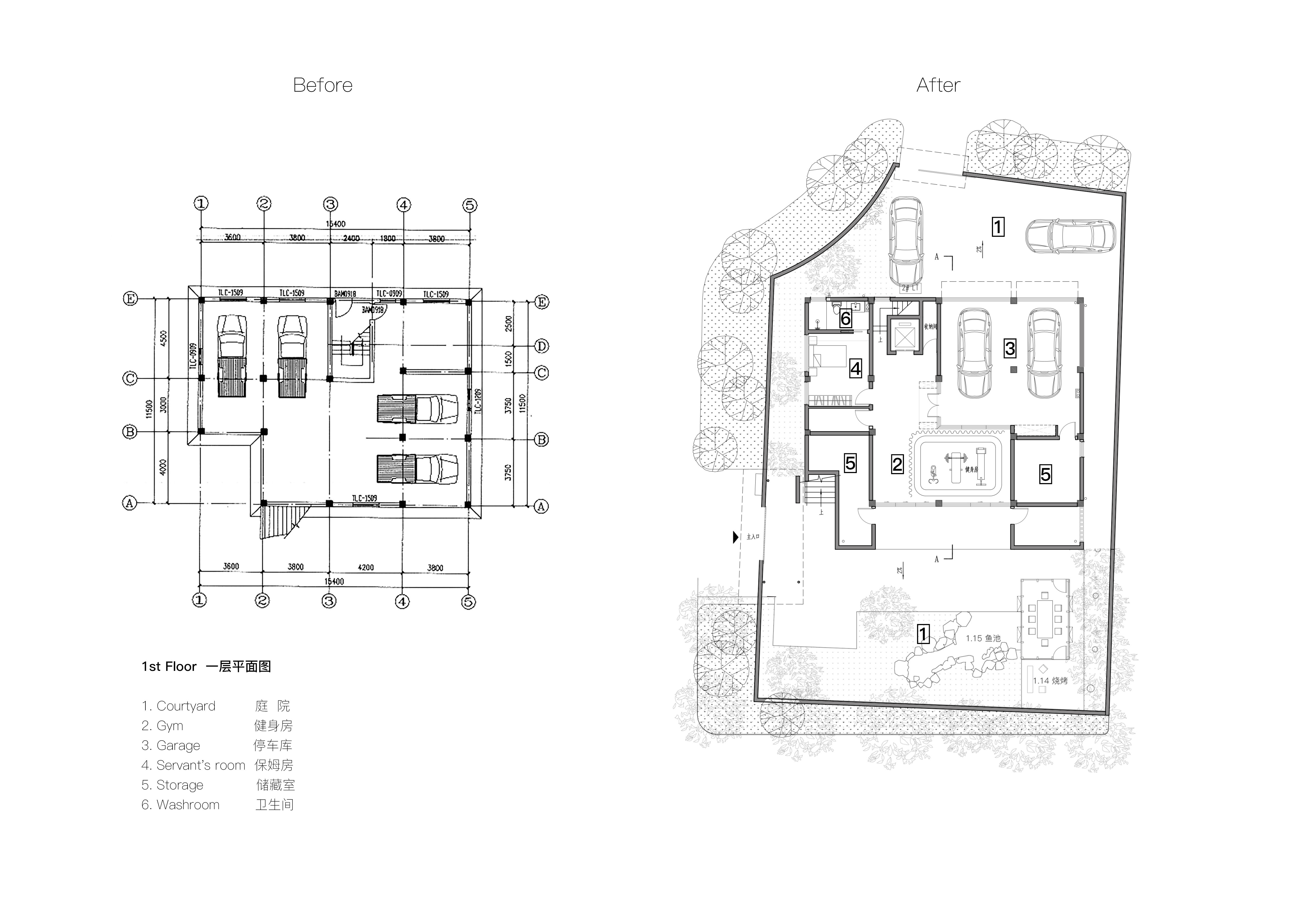
Located in Haining, Zhejiang Province, China, the Xu Residence is a four-story detached house built in the 1990s with a European-inspired architectural style. As the family's composition and lifestyle evolved, the original layout no longer met their changing needs. The renovation preserves the existing structural framework while reconfiguring interior spaces, renewing the building envelope, and reconnecting the house with its garden to create a more responsive living environment.
徐氏老宅位于中国浙江省海宁市,建于20世纪90年代,原为一栋四层欧式独栋住宅。随着家庭结构与生活方式的变化,原有空间逐渐无法满足当代居住需求。本次改造保留原有建筑框架,通过空间重组、立面更新与庭院整合,重新构建人与自然、家庭成员及生活空间之间的关系。
02 项目痛点 | Design Challenges
The original house suffered from limited natural daylight due to its deep floor plan and a weak connection to the surrounding garden. Its four relatively isolated levels also restricted interaction among family members across generations. The central challenge was to improve spatial quality and family connectivity while retaining the existing structure and accommodating evolving patterns of domestic life.
原建筑进深较大,室内采光不足,与庭院自然环境缺乏联系;四层空间相对独立,难以兼顾多代际家庭的独立性与互动需求。如何在保留既有建筑结构的前提下,改善空间品质、促进家庭交流,并适应未来生活变化,成为住宅改造的核心问题。
03 设计策略 | Design Strategies
1. 结构保留与空间更新 | Adaptive Reuse and Spatial Reconfiguration
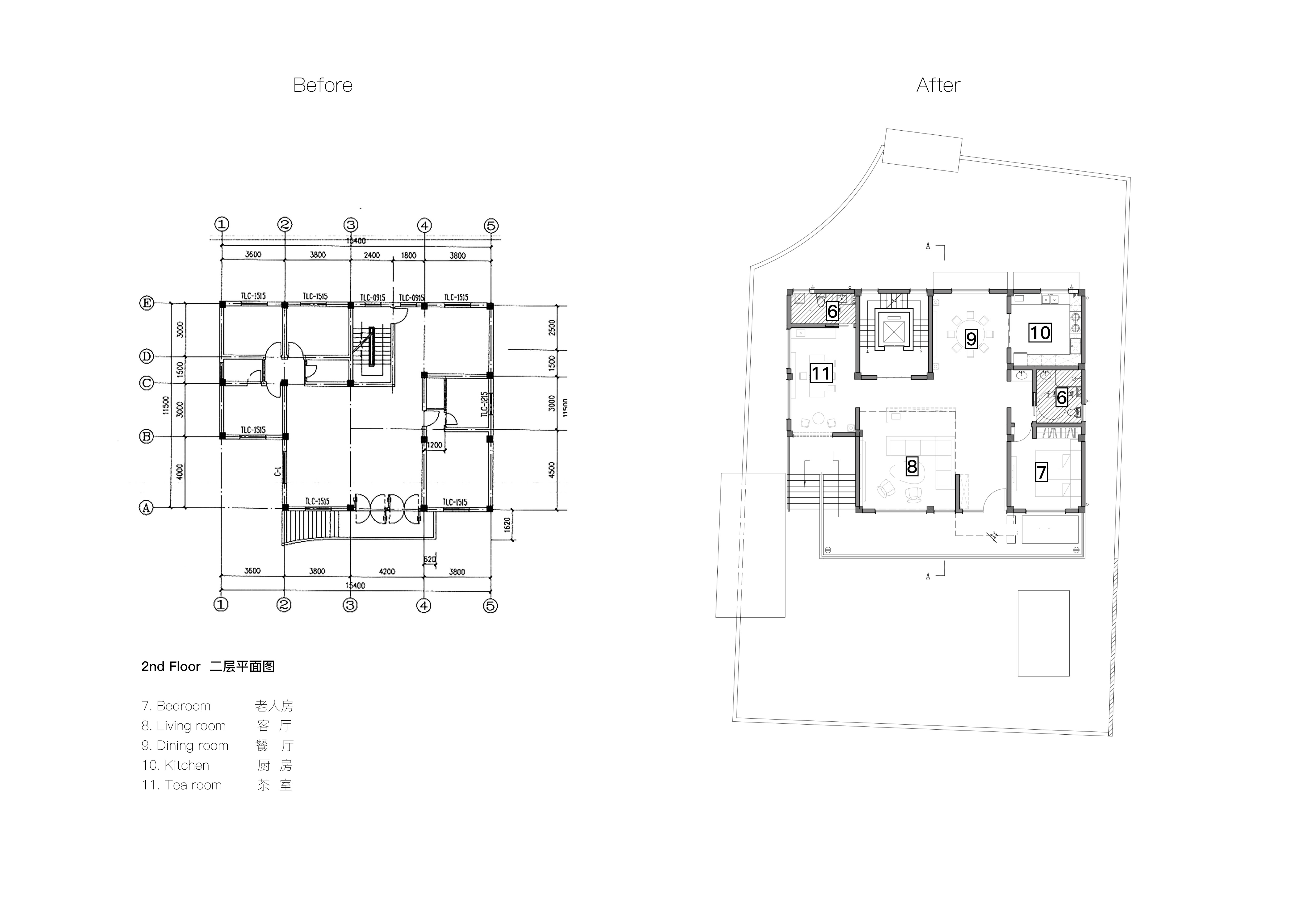
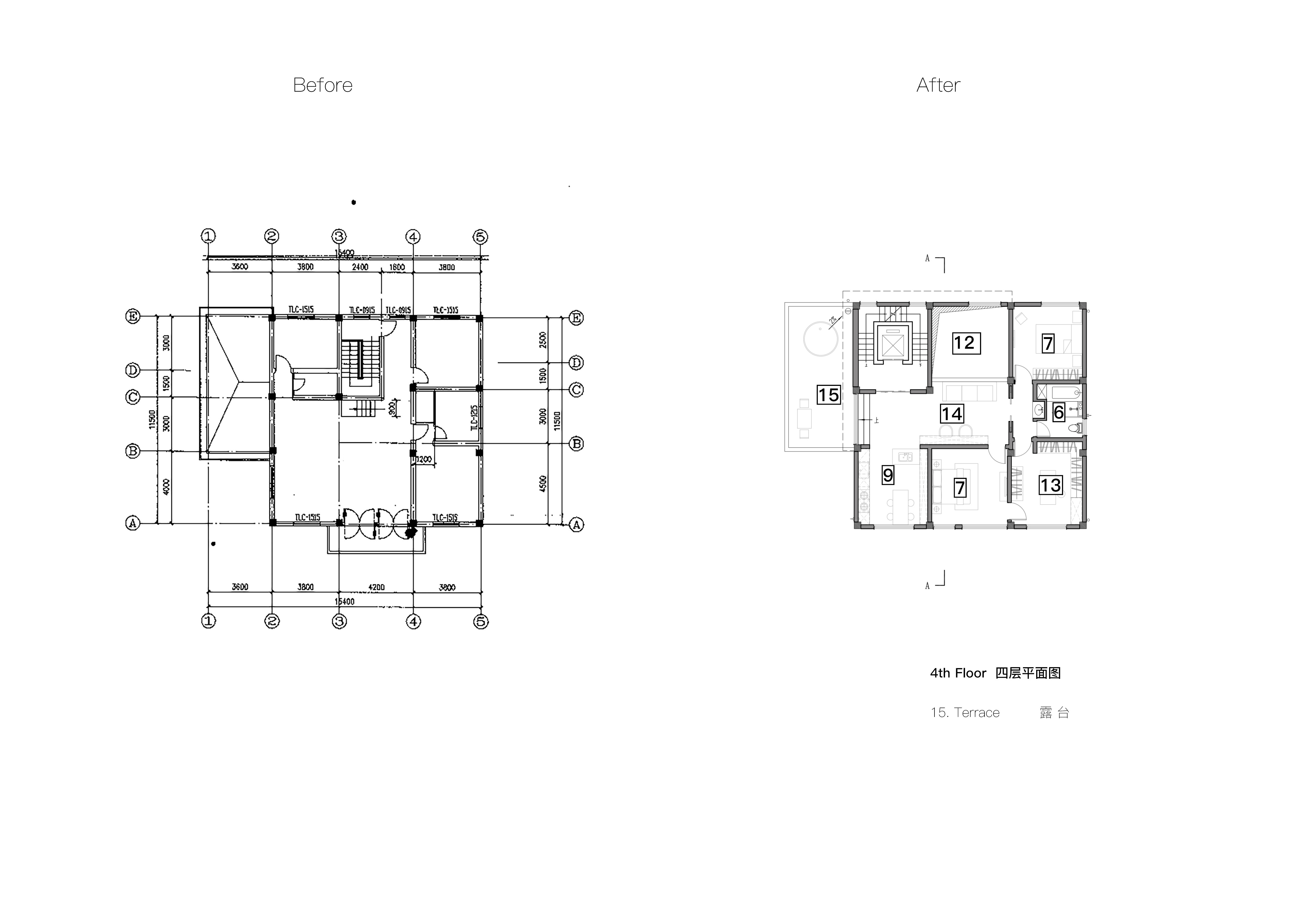
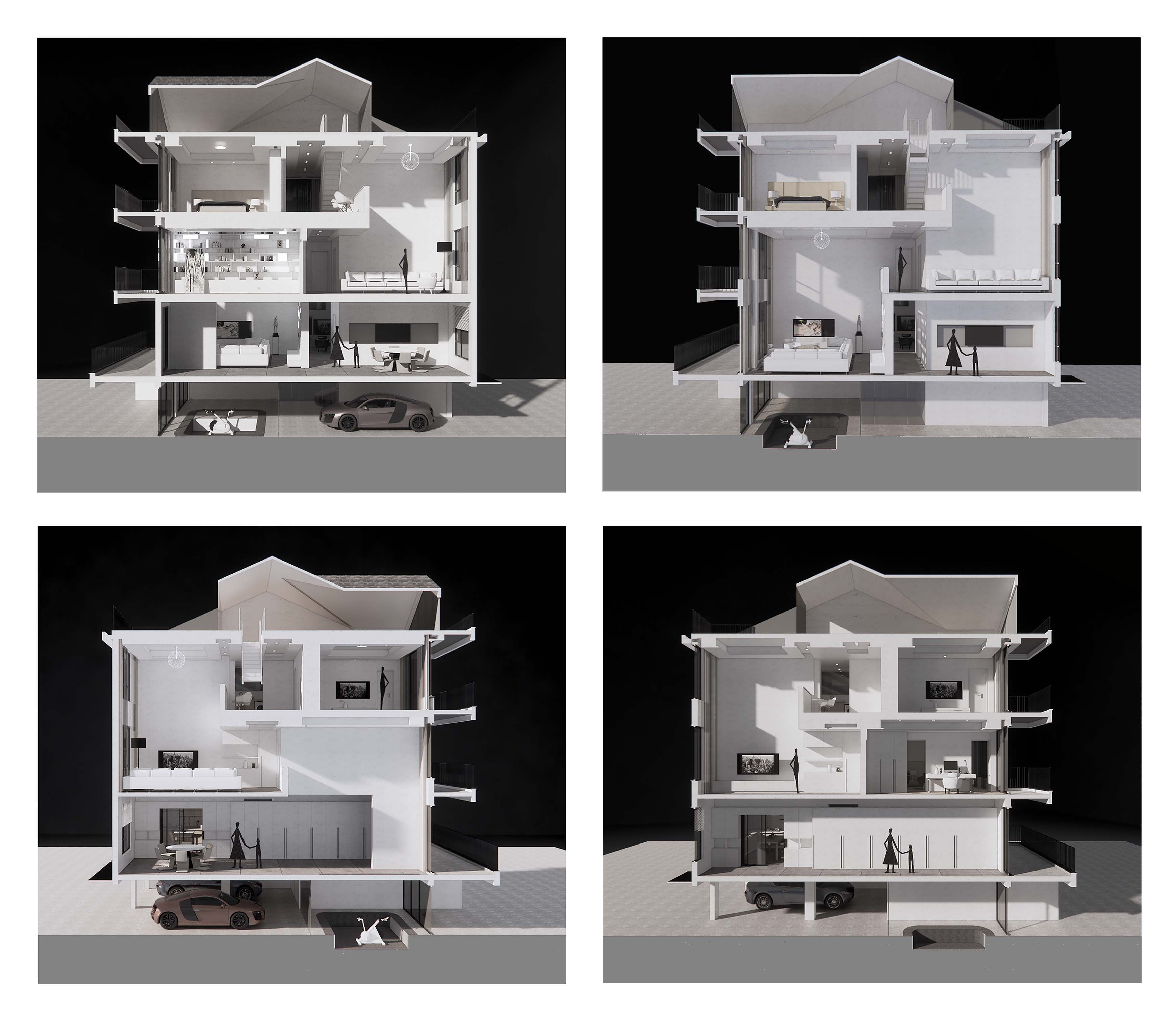
保留原有钢筋混凝土框架,通过局部楼板调整与功能重组,减少不必要的拆建,以精准的空间干预实现老建筑的再生。
The existing reinforced concrete frame was retained, while selective floor slab modifications and spatial reorganization transformed the interior. By minimizing unnecessary demolition, the design gives new life to the aging residence through targeted architectural interventions.
2. 自然采光与庭院融合 | Daylight and Garden Integration
保留庭院原有大树,重新组织景观与建筑界面。通过大面积落地玻璃和精心设计的开窗位置,引入自然光线,将庭院景色与四季变化融入室内生活。
Existing mature trees were preserved as integral elements of the garden design. Large floor-to-ceiling windows and carefully positioned openings bring natural daylight deep into the house, framing garden views and allowing seasonal changes to become part of everyday life.
3. 多代际家庭的空间互动 | Intergenerational Living and Connectivity
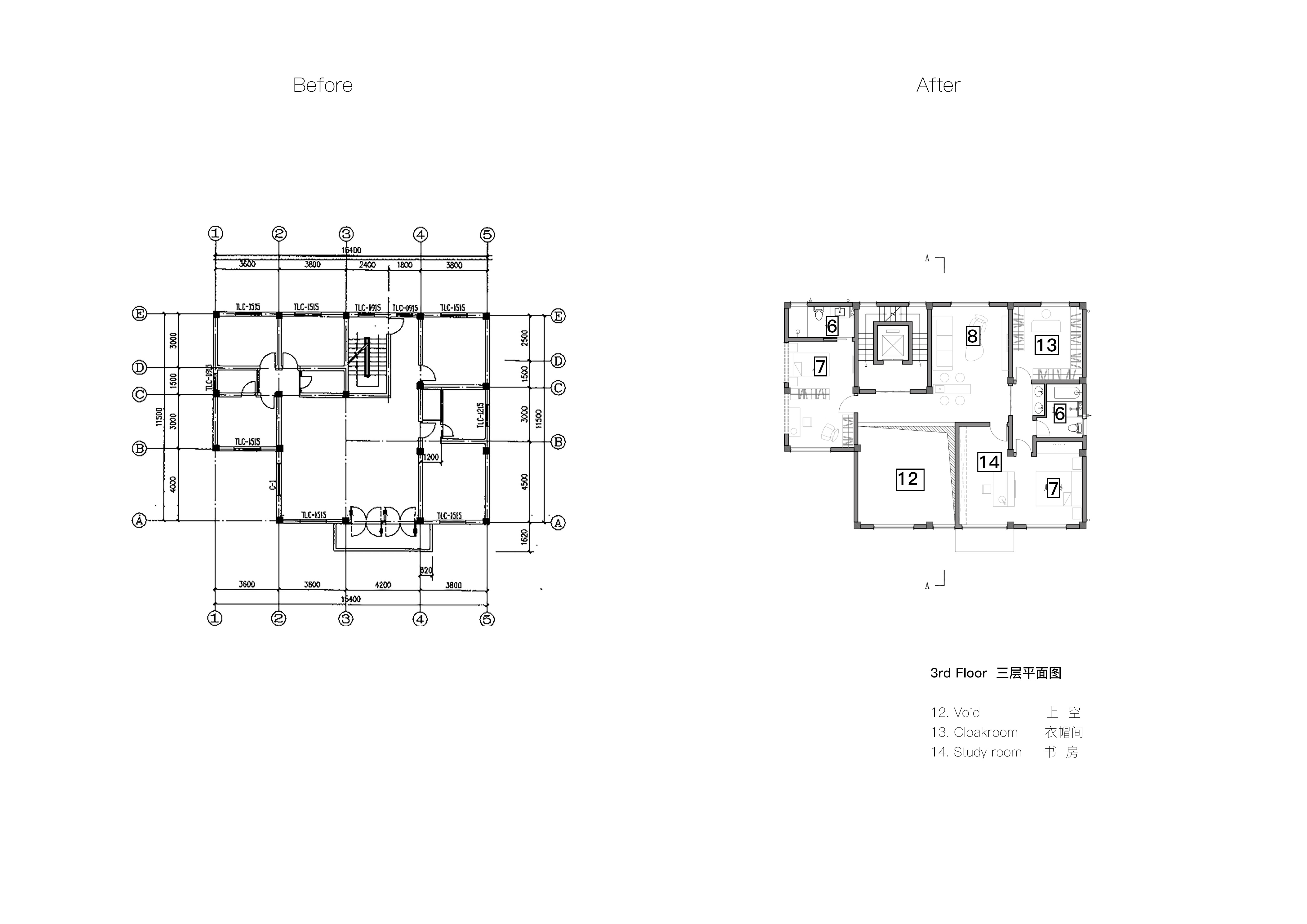
在二、三层起居及交通空间设置局部通高区域,建立跨楼层的视觉联系,在保障各代际独立生活的同时,创造更多自然交流与陪伴的机会。
Double-height spaces were introduced within the living and circulation areas on the second and third floors, establishing visual connections between different levels. This arrangement balances privacy and independence with opportunities for spontaneous interaction and shared family experiences.
4. 简约设计与生活留白 | Minimalism and Space for Living
整合储物及服务功能,减少冗余装饰,以白色空间、自然材质与光影变化营造宁静的居住氛围,让空间回归生活本身,并为未来的使用变化保留弹性。
Storage and service functions are consolidated to create open, uncluttered interiors. A restrained palette of white surfaces, natural materials, and shifting daylight fosters a calm domestic atmosphere. Rather than prescribing how every space should be used, the design leaves room for everyday rituals, personal expression, and future changes.
Drawings 图纸


AIR Co-LAB Studio © 2026
Hangzhou, China
杭州建筑设计工作室|公共文化、文旅休闲、企业总部及创新公共空间
 浙公网安备33010602012207号